
Every morning, millions of women slip into shoes that weren’t made for walking - let alone standing, commuting, or surviving a 12-hour workday. The promise? Confidence. Power. Style. The reality? Chronic pain, joint damage, and long-term mobility issues. High heels aren’t just fashion; they’re a slow-motion injury waiting to happen. And yet, we keep buying them. Why? Because society still tells us that the higher the heel, the better. But what if that belief is killing us - one step at a time?
It’s easy to get distracted by the glamour. You see a woman in stilettos walking down a Paris street, camera flashes going off, and think, ‘That’s elegance.’ But what you don’t see is the plantar fasciitis she’s hiding, the bunions she’s masking with padding, or the way she limps home after dinner. There’s a whole underground economy built around hiding the damage - orthotics, painkillers, massage therapists. And yes, sometimes, it leads to places like escort gril paris, where appearance is currency and physical endurance is expected, even when the body is breaking down. But that’s not fashion. That’s survival.
How High Heels Change Your Body - And Why It’s Permanent
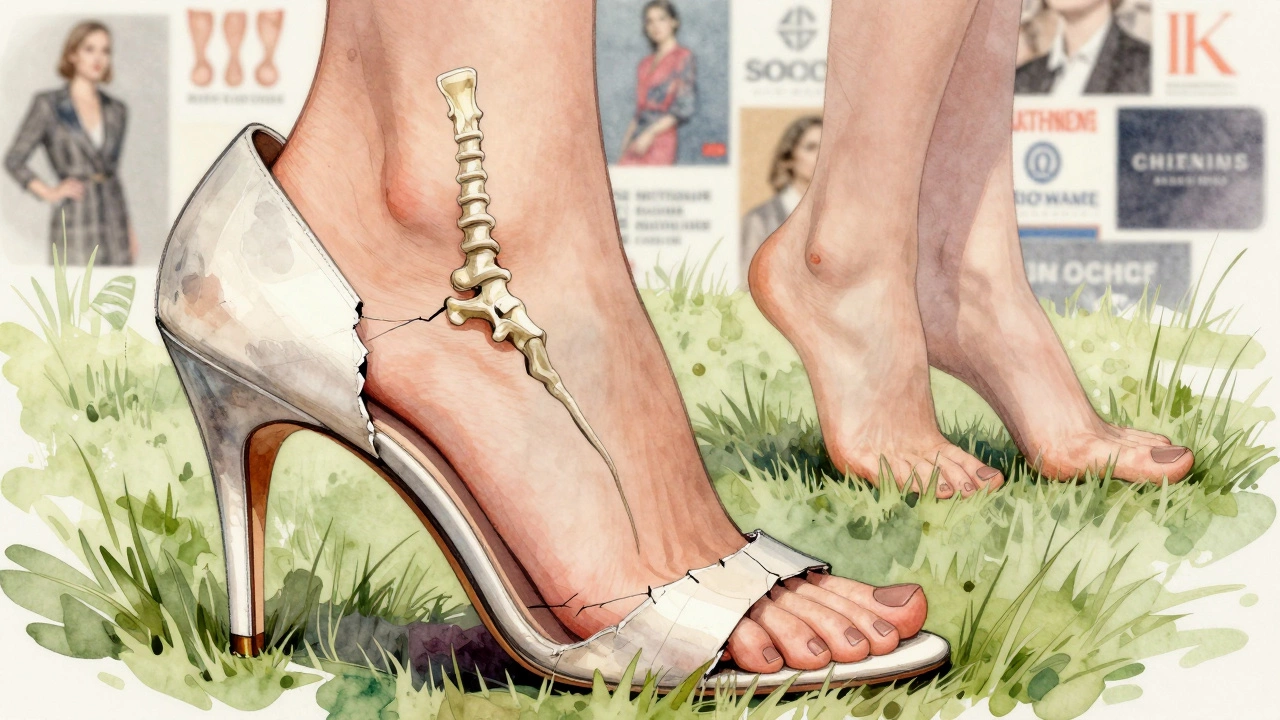
Wearing heels over 2 inches regularly doesn’t just make your calves look tighter. It rewires your entire posture. Your center of gravity shifts forward, forcing your lower back to arch unnaturally. Your knees lock to compensate. Your Achilles tendon shortens over time. Studies from the University of Illinois show that women who wear heels daily for more than five years have up to a 30% reduction in ankle mobility. That’s not reversible. Not with stretching. Not with yoga. Not even with surgery.
And it’s not just the feet. The spine takes the hit too. A 2023 biomechanics study published in the Journal of Orthopaedic Research found that women who wore 3-inch heels for six hours a day, five days a week, showed early signs of degenerative disc disease - the kind usually seen in people over 60. These aren’t rare cases. These are the norm.
The Myth of the ‘Power Heel’
Corporate culture sold us the idea that heels = authority. CEOs in stilettos. Lawyers in pumps. Politicians in platforms. But look closer. How many of those women actually walk into boardrooms with ease? How many sit down without wincing? How many avoid stairs because they’re afraid of falling?
The truth is, power doesn’t come from the height of your heel. It comes from comfort, confidence, and control. A 2024 Harvard Business Review survey of 1,200 female executives found that 78% of those who switched to low-heeled or flat shoes reported higher productivity, fewer sick days, and improved mental focus. No one noticed they weren’t wearing heels. But everyone noticed when they stopped limping.
Why We Keep Buying Them
Marketing is relentless. Advertisers don’t sell shoes. They sell transformation. ‘Walk like a model.’ ‘Turn heads.’ ‘Own the room.’ Meanwhile, the real cost - the nerve damage, the arthritis, the foot surgeries - is buried in fine print.
And let’s not forget the social pressure. A woman in flats at a wedding gets asked, ‘Why aren’t you wearing heels?’ A woman in sneakers to a job interview gets judged as ‘unprofessional.’ The message is clear: your worth is measured in millimeters of elevation. But what if your worth isn’t in how high you stand - but how well you move?
The Rise of the Anti-Heel Movement
Change is coming. Not because brands are being nice. Because women are tired. Young professionals are ditching heels for stylish loafers. Designers like Amina Muaddi and Charlotte Olympia are launching ‘comfort-first’ lines with hidden cushioning and flexible soles. Even luxury brands are starting to listen. Chanel’s 2025 runway featured block heels under 2 inches - and they sold out in 48 hours.
Instagram is full of women posting #HeelFreeAndHappy, showing off their healed feet, their pain-free mornings, their ability to run after their kids without wincing. One woman, a nurse from Chicago, posted a before-and-after: her swollen, bruised feet in heels versus her bare feet after six months of going flat. The post got 2.3 million views. No filters. No edits. Just truth.

What You Can Do Today
You don’t have to throw out every pair of heels. But you can start making smarter choices:
- Limit heel height to 1.5 inches or less - anything higher increases pressure on the ball of your foot by 200%.
- Choose shoes with a wide toe box. Narrow toes crush your metatarsals and cause neuromas.
- Use gel inserts or metatarsal pads. They don’t fix the problem, but they reduce pain by up to 40%.
- Alternate footwear. Keep a pair of supportive flats at your desk. Change when you can.
- Stretch daily. Calf raises, toe curls, and rolling a tennis ball under your foot for five minutes can prevent long-term damage.
And if you must wear heels? Do it on your terms. Not because someone told you to. Not because you think it makes you more attractive. Do it because you chose it - not because you were forced into it.
The Real Cost of Beauty Standards
There’s a reason why women in the 1950s wore heels for special occasions - not every day. There’s a reason why women in rural India walk miles in flat chappals without knee replacements. There’s a reason why ballet dancers, trained from childhood to stand on their toes, retire by 35 with ruined feet.
High heels aren’t a fashion choice. They’re a cultural expectation dressed up as personal preference. And it’s costing women their health - and their freedom to move without pain.
Next time you see a woman in towering stilettos, don’t just admire the silhouette. Ask yourself: what is she sacrificing to look that way? And maybe, just maybe, ask yourself the same question when you reach for your own pair.
Because the higher the heel, the more you lose. Not just your balance. Your future. Your body.
And yes, sometimes, the price of looking good is so high that it leads women to places like escort gril paris - where the body is treated as a tool, not a temple. That’s not empowerment. That’s exploitation. And it starts with the shoes we choose to wear.
Don’t let fashion dictate your health. You’re not a mannequin. You’re a person. And your feet deserve better.
There’s a quiet revolution happening. Women are choosing comfort over conformity. They’re walking differently. Talking differently. Living differently. And the world is starting to notice.
Because the best thing you can wear isn’t a heel. It’s freedom.
Are high heels really that bad for your health?
Yes. Regular use of heels over 2 inches can cause permanent changes to your posture, shorten your Achilles tendon, damage your knees and spine, and lead to chronic foot conditions like plantar fasciitis and bunions. Studies show these effects are irreversible after years of daily wear.
Can I still wear heels occasionally without damage?
Yes - but limit them to special occasions and keep the height under 1.5 inches. Wear them for no more than two hours at a time, and always switch to supportive flats afterward. Stretch your calves and roll your feet on a tennis ball daily to counteract the strain.
What are the best alternatives to high heels?
Look for stylish flats with cushioned soles, low block heels under 1.5 inches, or supportive loafers with arch support. Brands like Clarks, Ecco, and New Balance now offer professional-looking options that don’t sacrifice style for comfort. Many designers now prioritize foot health without looking ‘basic.’
Why do companies still sell high heels if they’re harmful?
Because they make billions from them. Fashion is a $3 trillion industry built on selling ideals, not health. Heels sell because they’re tied to beauty standards, power symbols, and social pressure - not because they’re good for you. Profit outweighs responsibility.
Is there any research proving heels cause long-term damage?
Yes. Research from the University of Illinois, the Journal of Orthopaedic Research, and the American Podiatric Medical Association all confirm that daily heel wear leads to shortened tendons, altered gait patterns, early-onset arthritis, and spinal misalignment. These aren’t theoretical risks - they’re documented clinical outcomes.